Why we doubled down on Epoch Biodesign
Why we followed our conviction into Epoch Biodesign's latest round
Plastic pollution is no longer a distant, abstract concern; it is a tangible crisis that touches every part of our lives. As journalist Craig Leeson put it, once you truly see it, “you cannot unsee it.” From production to disposal, plastic is embedded in modern economies and ecosystems, with devastating environmental, human health, and climate consequences.
At KOMPAS VC, we believe solving systemic problems like plastic waste requires systemic innovation. That is why we initially backed Epoch Biodesign and its founder, Jacob Nathan, in their Series A, and more recently decided to double down by participating in their $12 million strategic funding round alongside Canadian lifestyle fashion brand Lululemon, Extantia, and Volkswagen’s venture arm Leitmotif. This funding round brings the company's total capital raised to over $50 million.
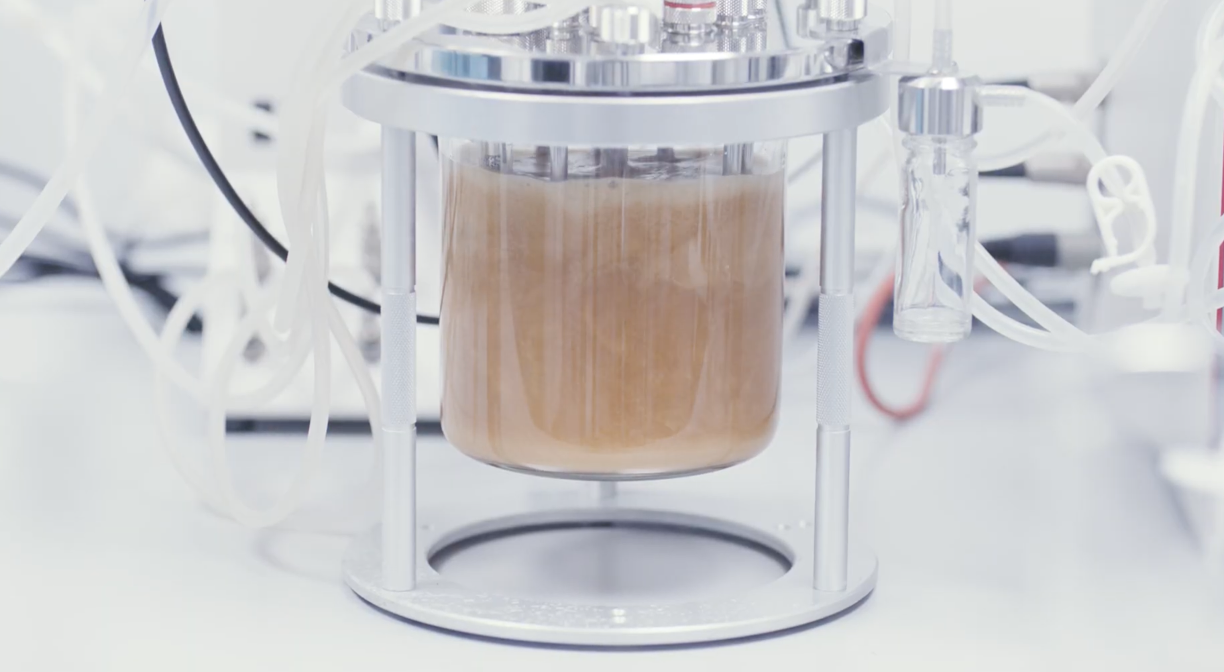
Epoch is building a next-generation platform for enzymatic plastic recycling — one we believe could radically improve how materials are made, used, and reused in the global economy.
The Plastic Crisis: Systemic, Costly, and Deepening
Global plastic production exceeds 400 million metric tonnes annually, of which only 9% is recycled. The rest accumulates in landfills, oceans, and human bodies in the form of microplastics. These particles absorb toxins, travel through the food chain, and are now found in human tissues and organs, which is linked to inflammation, toxicity, and even cancer.
The climate toll is no less staggering: plastic accounts for around 4% of global GHG emissions, with many polymers derived from fossil fuels. Emissions arise not only during production but also in distribution and disposal and they’re rising fast.
As regulation tightens and consumer sentiment shifts, particularly in industries like fashion and packaging, companies face increasing pressure to adopt circular models. But the infrastructure and technology to support true circularity, especially for plastics, is lacking. A significant gap exists between corporate recycling targets and the availability of recycled feedstock.
The Rise of Enzymatic Recycling
Recycling technologies fall into four categories: mechanical, chemical, pyrolytic, and enzymatic. Each has merits and drawbacks. However, enzymatic recycling stands out for its ability to break polymers down into virgin-grade monomers at low temperatures, without toxic chemicals, and with tolerance for impurities in the waste stream. That means enzymatic solutions are energy-efficient, clean, and adaptable to real-world plastic waste, making them ideal for scalable circularity. Category leaders in this field can design bespoke enzymes cost-effectively for various polymers.
What convinced us about Epoch Biodesign is their platform approach. Founded in 2021 by Jacob Nathan, a remarkable young entrepreneur who started the company as a high school science project, Epoch has developed a proprietary AI-accelerated enzyme engineering platform that can design novel enzymes for some of the most chemically stubborn plastics, including nylon, PET, PE, and PVC.
Rather than pursue the largest markets first (PET or PE), Epoch has smartly chosen nylon as its beachhead, a higher-value material with fewer recycling solutions and greater margin for early commercialisation. This strategic focus allows Epoch to achieve cost parity faster and demonstrate commercial viability before expanding into broader markets. Epoch’s enzymes are designed to degrade polymers under mild conditions, producing high-purity outputs that can be reused in industrial applications. This positions them to serve industries ranging from textiles and packaging to construction and automotive. The company’s technical-economics analysis (TEA) provides a credible roadmap to achieve cost parity with fossil-based alternatives — a key hurdle that has held back commercial adoption of recycling tech.
Strong Team, Real Traction, and a Scalable Vision
A world-class team leads Epoch with deep experience in synthetic biology, computational enzyme design, and scale-up operations. Jacob Nathan, the CEO, brings not only technical depth but also exceptional clarity of vision and commercial maturity. In addition to technical promise, Epoch already shows strong signs of traction. The company is collaborating with major brands and manufacturers on early pilots, including in textiles, where circularity is fast becoming a competitive necessity.
These developments underscore growing industry demand and the potential for Epoch to position itself as the enabling technology behind next-generation circular products.
Our investment in Epoch aligns squarely with the KOMPAS mission: accelerating industrial decarbonisation and promoting a circular economy. What made this opportunity stand out was the combination of:
* A compelling founder and team with strong vision and technical talent
* A scalable, differentiated platform for enzyme discovery and design
* A clear pathway to economic viability, even in hard-to-recycle segments
* Early commercial traction and strong signs of product-market fit
In short, Epoch Biodesign is not just solving a problem, it is building the infrastructure for a new materials economy, where waste is no longer an endpoint but a feedstock for creation. We’re thrilled to join their journey and can’t wait to see how far they go.
To learn more, visit: https://epochbiodesign.com